CyRAACS SERVICE
Consulting services can provide the expertise and guidance needed to ensure your business is protected from malicious actors. Whether you’re looking to implement a comprehensive security strategy or simply need advice on compliance and data protection, a cybersecurity consultant can provide the support you need.

At CyRAACS, we perform an extensive Risk Assessment to identify the inherent and residual information security risks across the organization. Based on the assessment conducted, we recommend Risk Mitigation measures to ensure the appropriate security controls are in place in line with the organization risk appetite.

Business Continuity planning is essentially a form of insurance. It gives organizations the comfort of knowing that, even if disaster strikes, the damage won’t be overwhelming.
Having an effective Business Continuity Management ensures that organizations can continue to provide an acceptable service in the event of a disaster, helping them preserve their reputation and keep revenue coming in. In the event that its key management resources are compromised, it is critical for an organization to be proactive and create a viable plan of countermeasures.
CyRAACS’s business continuity professionals provide consultancy help in identifying risks arising from third party vendor networks, managing them effectively, and planning how you can operate, improving your organizational resilience.

An Information Security Maturity Model provides a path forward and enables the organization to periodically assess where it is along that path. Our unique qualitative and quantitative assessment model is adapted from the CMMI rating scale. CyRAACS’s Maturity Model Assessment framework helps to understand the organization’s risk exposure, and the maturity of the current information security program and identify areas for improvement, we also create benchmarks against other organizations and validate that security investments have improved security posture. We also provide a roadmap with opportunities in the areas of technology, process, and capabilities for information security.
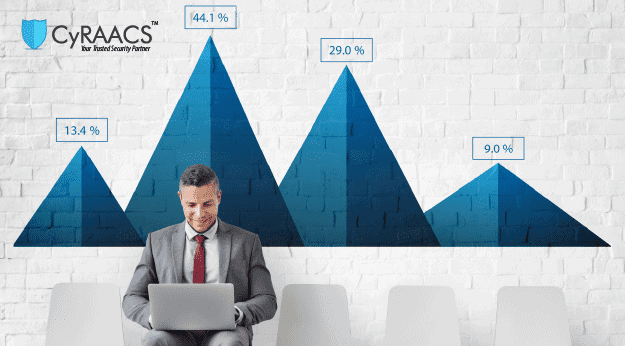
For today’s way of the data treatment, it is an easy target to expose as organizations across the world are looking at the increasing amounts of data to deal with every day, this could be through e-mails, files, transactions, etc. Hence organizations urgently need to understand what their sensitive data is and where they are so that they can deploy appropriate controls to protect it. Data Flow Analysis (DFA) is the first step toward identifying sensitive data and implementing appropriate security controls for data protection.
CyRAACS’s DFA framework covers all the stages of the data lifecycle right from data acquisition to retirement. It helps to capture an accurate picture of the data flow at various stages within the organization. The output from DFA can act as key inputs to a Digital Rights Management (DRM) or Data Leakage Prevention (DLP) tool implementation, should an organization wish to implement those tools.

Build your future with us.
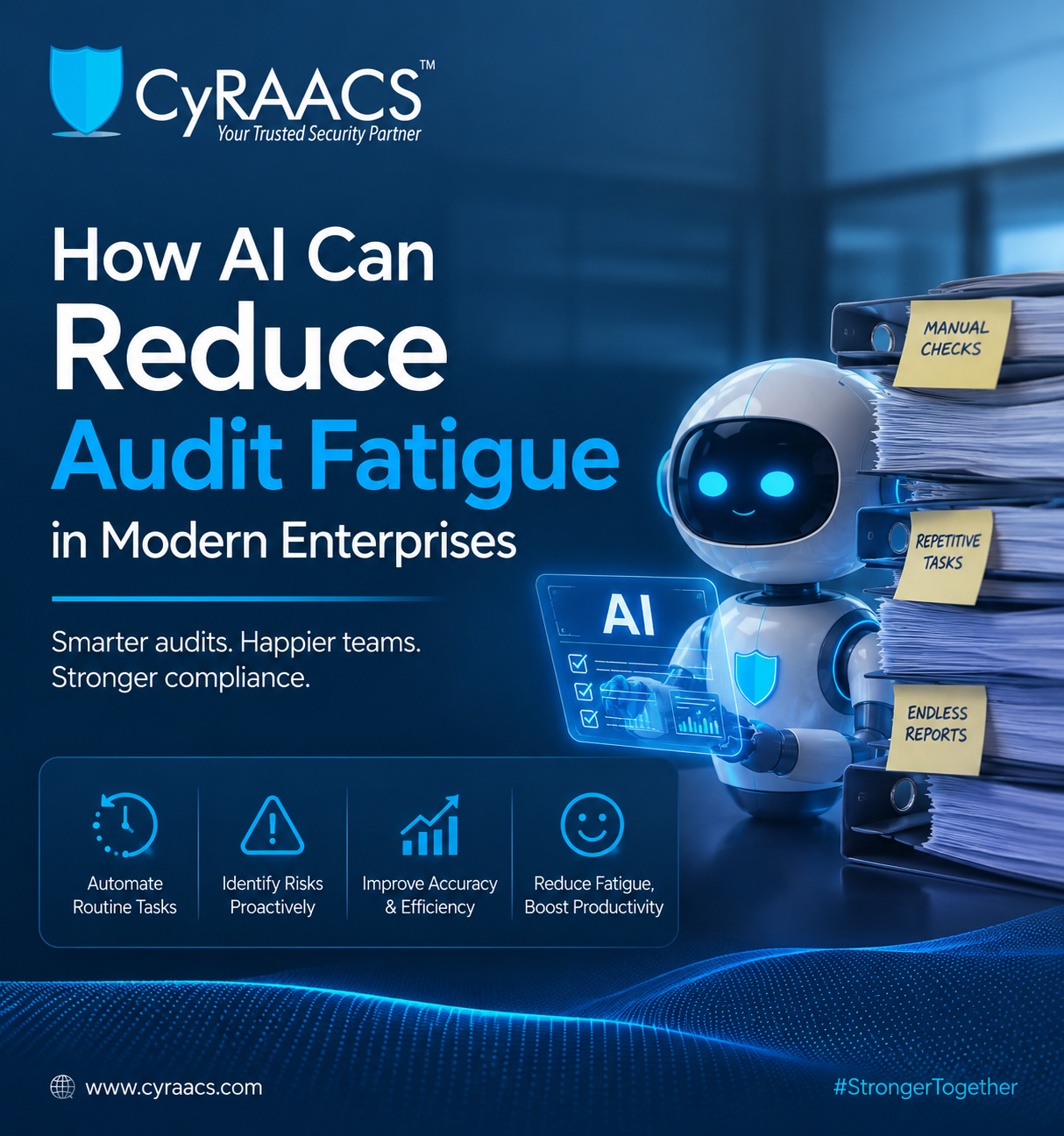
Audit fatigue has become one of the most underestimated operational challenges in modern enterprises. Across BFSI, healthcare, SaaS, manufacturing, and technology sectors, organizations today face continuous assessments from regulators, customers,
Artificial Intelligence is no longer experimental. It is embedded into core business processes across industries, from customer experience and fraud detection to underwriting and decision automation. But as organizations accelerate
As organisations accelerate the adoption of artificial intelligence (AI) across business-critical functions, the conversation is rapidly shifting from innovation to accountability. AI systems are no longer experimental tools operating at
For years, infrastructure teams viewed the OSI model as a conceptual framework useful for troubleshooting, but rarely something we actively thought about while designing systems. That has changed. With the
Why Continuous Automated and Manual Pentesting Must Move at the Speed of Development Modern enterprises are building and releasing software faster than ever before. Agile development, DevOps pipelines, cloud native
Artificial Intelligence (AI) is transforming industries, but it also introduces unique security risks that go beyond traditional IT vulnerabilities. As organizations increasingly rely on AI systems, Vulnerability Assessment and Penetration
According to the Identity Theft Resource Center’s (ITRC) 2025 Trends in Identity Report, impersonation scams have surged by 148% year-on-year, becoming the most commonly used fraud method globally. The widespread
Governance, Risk, and Compliance (GRC) play vital roles in helping organizations manage uncertainty, meet regulatory obligations, and maintain operational efficiency. However, as businesses grow and regulations evolve, managing GRC manually
The Transformation Imperative Internal audit is at a critical crossroads. Traditional periodic assessments and compliance checklists can no longer keep pace with today’s rapidly evolving risk landscape. Based on extensive
With the evolution of the threat landscape, the risk management approach has evolved. The approach is no longer static dependent on static and manual controls like quarterly reviews, annual audits,
Social engineering has always been about exploiting human trust. But with the rise of generative AI, attackers now have access to tools that can craft realistic emails, clone voices, simulate
How CyRAACS™ and the COMPASS Platform Are Transforming Cybersecurity Leadership In today’s rapidly evolving threat landscape, organizations face increasing pressure to protect sensitive data, ensure compliance, and build operational resilience.
In today’s rapidly evolving threat landscape, traditional approaches to cybersecurity and risk management are struggling to keep up. From increasing cyberattacks to disruptions across complex supply chains, manufacturing companies face
As organizations continue to embrace artificial intelligence (AI) across operations, from automation and analytics to cybersecurity and compliance, the surface area of potential threats is also expanding. While AI promises
Generative AI technologies – ranging from large language models (LLMs) to image and code generators – are transforming the financial sector. From automated customer interactions to rapid risk analysis, financial
Compliance today is more complex and dynamic than ever. With increasing regulations, growing attack surfaces, and limited resources, businesses—especially SMEs—are under pressure to stay compliant, continuously. AI and automation are